
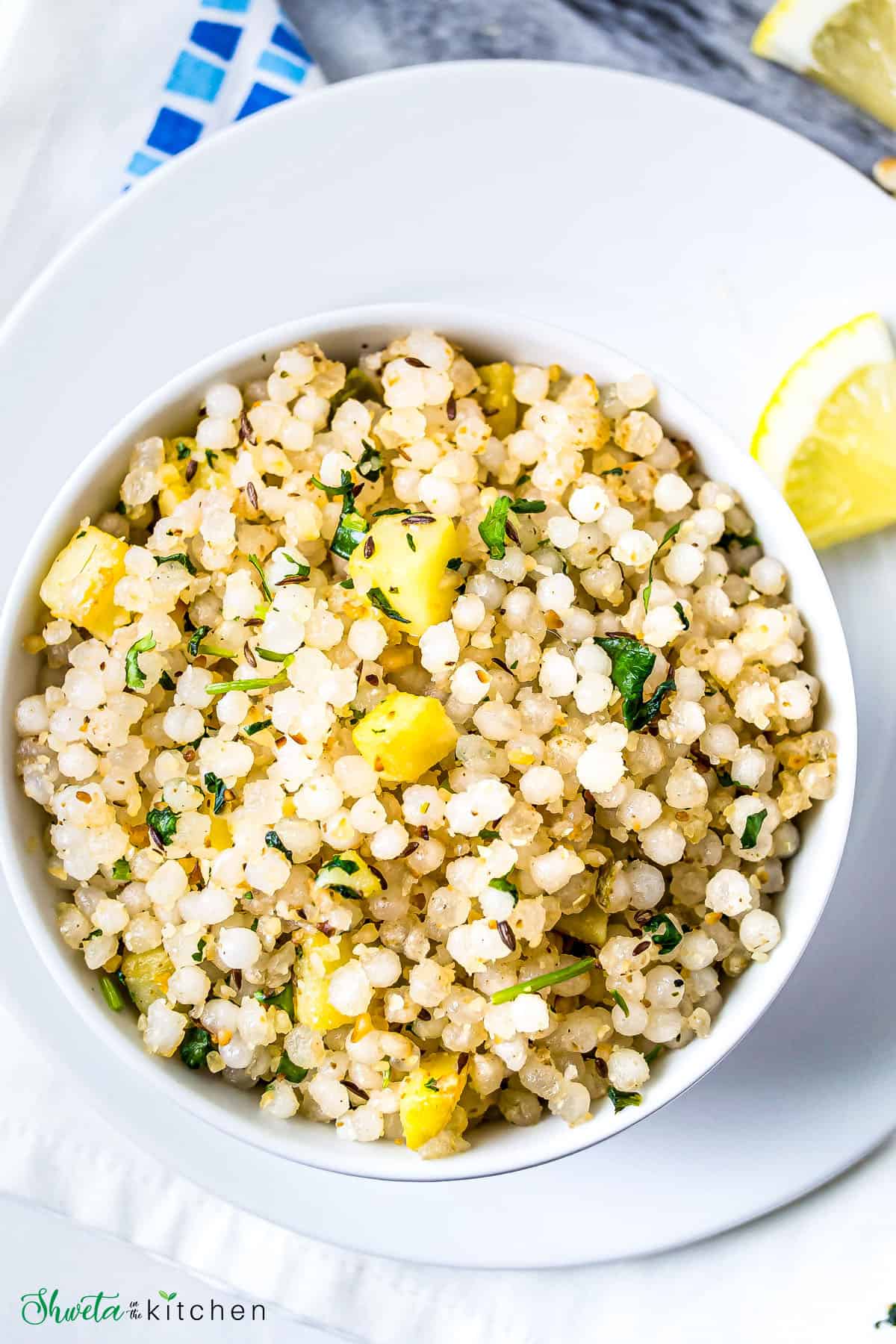
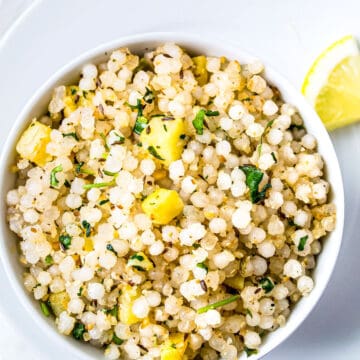
Sabudana Khichdi is a popular Indian dish made with sabudana (tapioca pearls), potatoes, roasted peanuts, and a few basic spices. This easy and gluten-free sabudana recipe is commonly prepared during the fasting season of Navratri, Mahashivratri, and Ganesh Chaturthi.
I am sharing how to make a non-sticky Maharashtrian-style sabudana khichdi recipe that is delicious, soft, and not chewy or mushy.
Want to save this recipe?
Sabudana Khichdi is one of my favorite breakfast recipes, and although it is very popular during the fasting season of Sankashti Chaturthi or Angaraki Sankashti Chaturthi and Navratri, I can eat it anytime, no occasion needed.
It is a very simple recipe that requires just a handful of ingredients, but if not made right, it turns out sticky, mushy, or goopy. But not anymore!
I'm sharing a foolproof recipe with all the tips I've learned from My Mom and through my experience, so you can make the perfect, non-sticky Sabudana Khichdi every single time.
If you love sabudana like me, definitely check out these other favorite sabudana recipes Sabudana Vada and Sabudana Kheer.
Jump to:
About Sabudana Khichdi
Sabudana Khichdi is a savory, gluten-free dish made with 3 basic ingredients: Sabudana (tapioca pearls or Sago), roasted peanuts, and potatoes.
It is also known as "Sabudanyachi khichdi" in Marathi, "Sabudana Ki Khichdi" in Hindi, and "Tapioca Pilaf" in English.
This sabudana dish is also a popular fasting food in India during the festival season of Navratri, Shivratri, Ekadashi, and other Hindu fasting days.
I grew up eating the simple Maharashtrian Sabudana Khichdi recipe, where the soaked sabudana is tempered with ghee, cumin seeds, green chilies, potatoes, and crushed roasted peanuts, seasoned with salt, lemon juice, and garnished with cilantro. It is easy and absolutely delicious!
Although this recipe for tapioca khichdi is easy and simple, it does require some preparation, including soaking the sabudana and using proper cooking techniques to ensure the khichdi doesn't clump or become mushy.
Here are all the tips and tricks to make the best Sabudana Khichdi at home, which is fluffy and soft (not chewy or sticky).
Recipe Ingredients
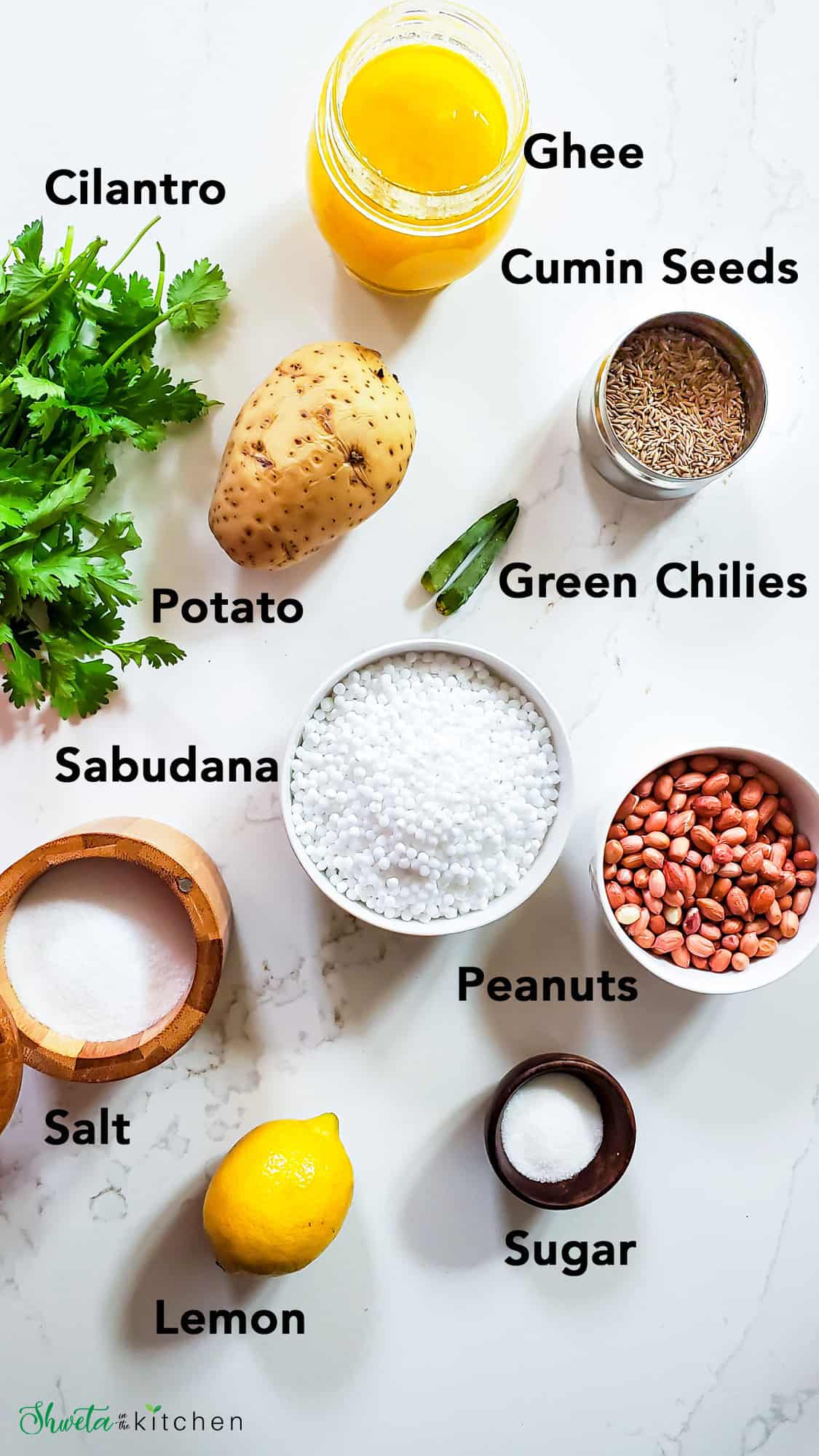
Sabudana: This is the main ingredient for this recipe, also known as sago or tapioca pearls. Use good-quality regular sabudana (sago pearls) available in most Indian grocery stores for making Khichdi. Depending on the quality of your sabudana, the soaking time will vary. So experiment with a few varieties till you find the one that works best for you. See the tips below for the perfectly soaked sabudana.
Peanuts: I've used raw peanuts with skin, which I roast, peel, and then crush. To quicken the process, you can prepare the peanuts ahead of time or buy already roasted, unsalted peanuts. If you are allergic, you can make Sabudana Khichdi without peanuts; however, I highly recommend adding peanuts for authentic flavor.
Potato: Potatoes are optional, so you can make Sabudana Khichdi without potatoes, too. I love adding potatoes to my Khichdi, especially during fasting, since they provide volume, making it more filling. You can use boiled potatoes to reduce cooking time. With raw potatoes, cut them into smaller cubes to help them cook faster.
Spices and seasonings: I only use cumin seeds (zeera), salt (sendha namak), sugar, and green chilies for making sago khichdi. These are the basic spices considered safe for consumption during fasting (vrat/upvas); however, you can also add turmeric, red chili powder, curry leaves, etc.
Ghee: For cooking, I prefer making sabudana khichdi with Ghee (Indian clarified butter) and highly recommend it. It gives it great flavor. You can use oil to keep it vegan.
Others: Lemon juice and cilantro leaves provide the finishing touches. I use cilantro only during non-fasting days.
Please refer to the recipe card for exact measurements of ingredients.
How to Make Sabudana Khichdi (Stepwise Photos)
Roasting Peanuts
I've used raw peanuts with the skin on, so roasting is required. You can also use the roasted unsalted peanuts, in which case roasting (steps 1-4) can be skipped.
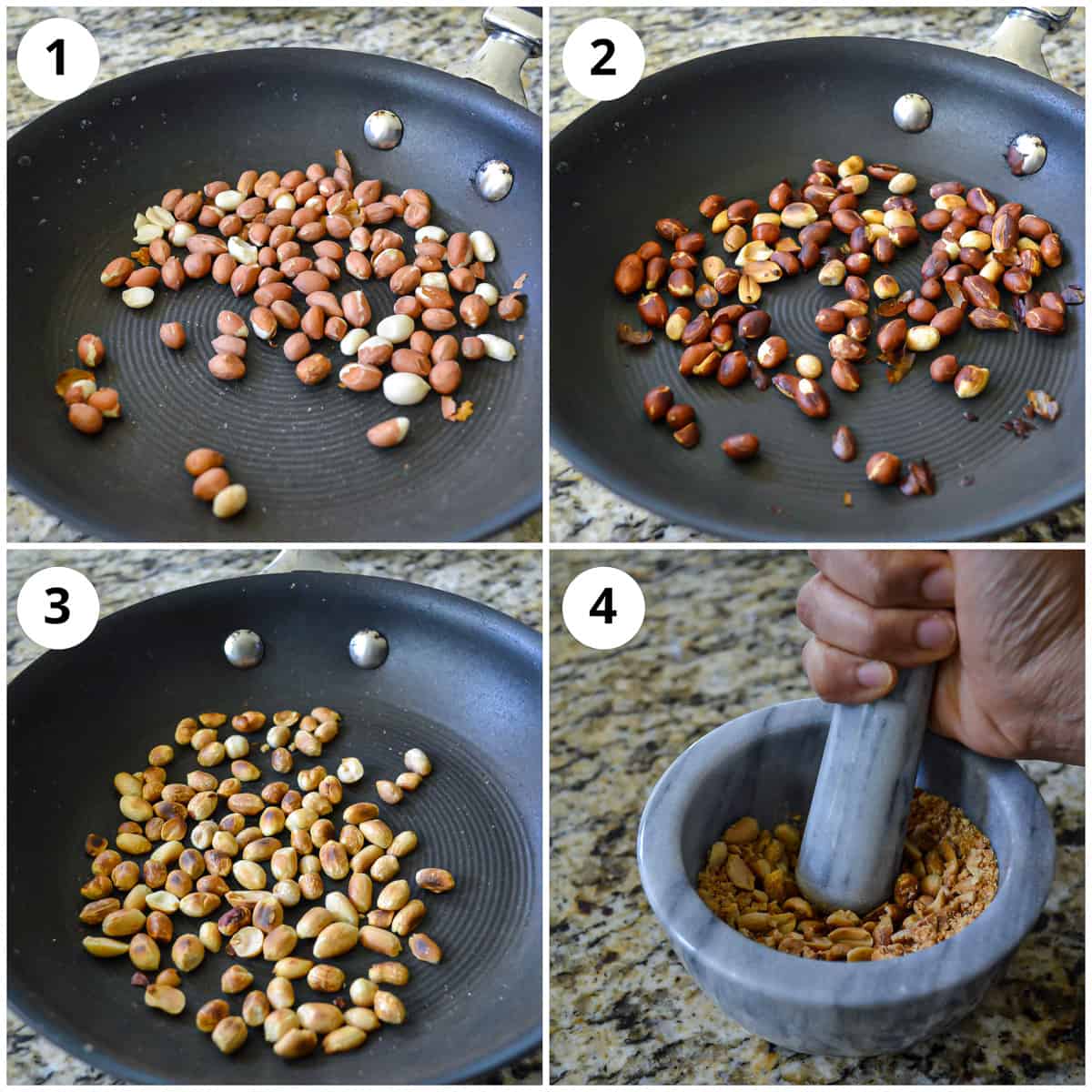
1 - Heat a pan on medium-low heat, add the peanuts, and dry roast them until they are slightly golden, crunchy, and aromatic.
2 - Turn off the heat and allow it to cool completely. I leave mine in the pan for another 15-30 minutes and stir in between to prevent the peanuts from burning. Then transfer to a plate to cool completely.
3 - Peel the skin off by rubbing the peanuts between your palms (it's easier to do so after roasting). Store them in an airtight container until you are ready to use them. This can be done in advance.
4 - When you are ready to make khichdi, coarsely crush the roasted peanuts in a mortar pestle or food processor. I prefer a coarse consistency, so it's a mix of peanut powder and bits of peanuts.
Soaking and Prepping Sabudana
Soaking and prepping sabudana is one of the most crucial steps in making sabudana khichdi.
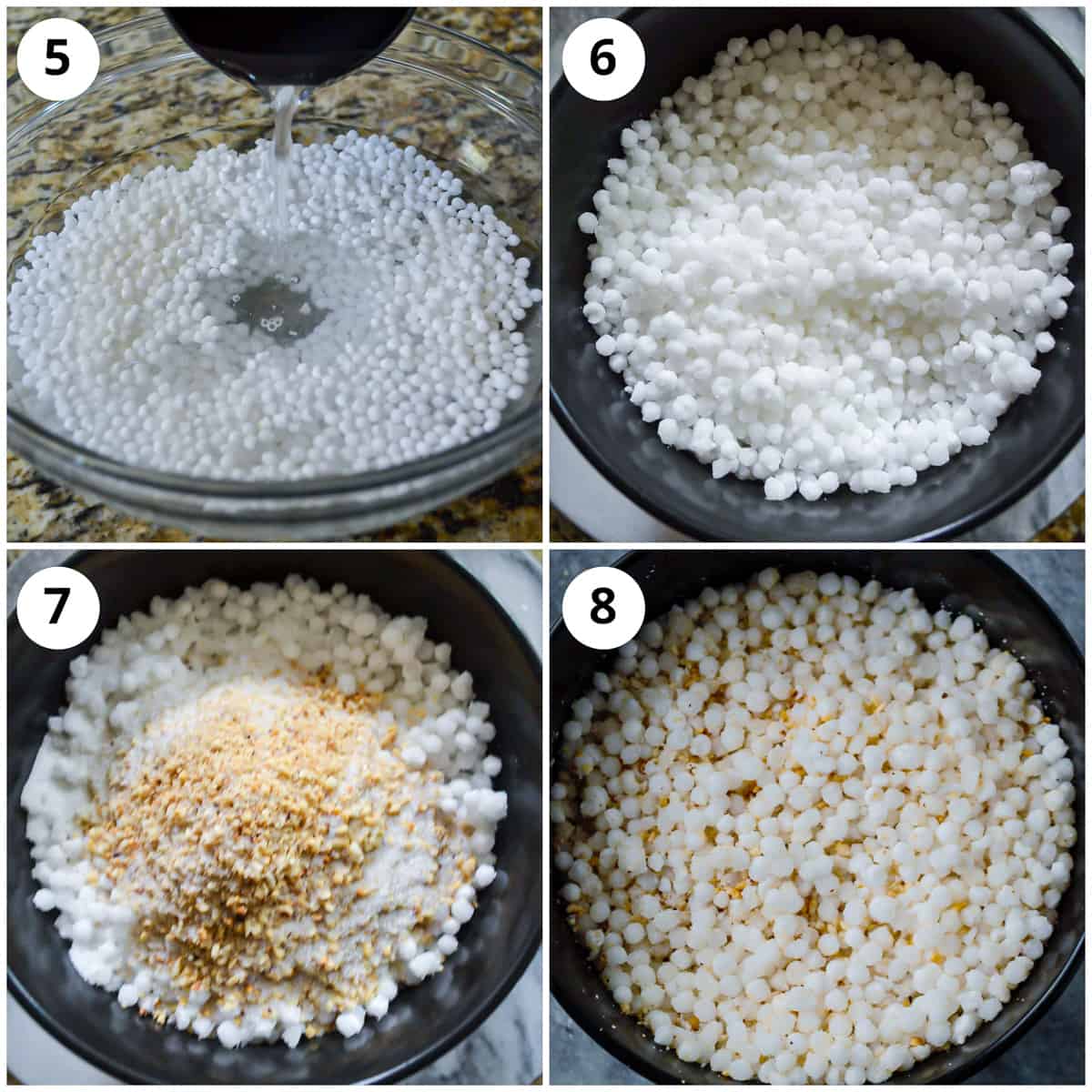
5- Rinse the sabudana well (4-5 times) till the water runs almost clear. It is important to remove all the starch. Then soak them in 2 cups of water for 2 hours. They will double in size.
6 - Drain the remaining water, and cover the sabudana overnight or at least for 4-5 hours. I usually refrigerate them overnight. In the morning, remove them from the fridge. They should be completely dry with no water left.
Gently fluff the sabudana pearls using a fork to separate any that may stick, without breaking them. This helps achieve the perfect texture for these pearls.
To check if the sabudana is soaked properly, press the pearls between your thumb and index finger. It should mash easily. If the center feels hard, soak it in 2-3 tablespoons of water for an additional 30 minutes and test again.
You can also soak the sabudana ahead of time, drain, and refrigerate for 3-4 days.
7 - To these fluffy, soaked sabudana pearls, add the coarsely ground peanuts, salt, and sugar. Mixing ground peanuts with sabudana helps to keep the pearls separate.
8 - Mix well and keep aside.
Making Sabudana Khichdi
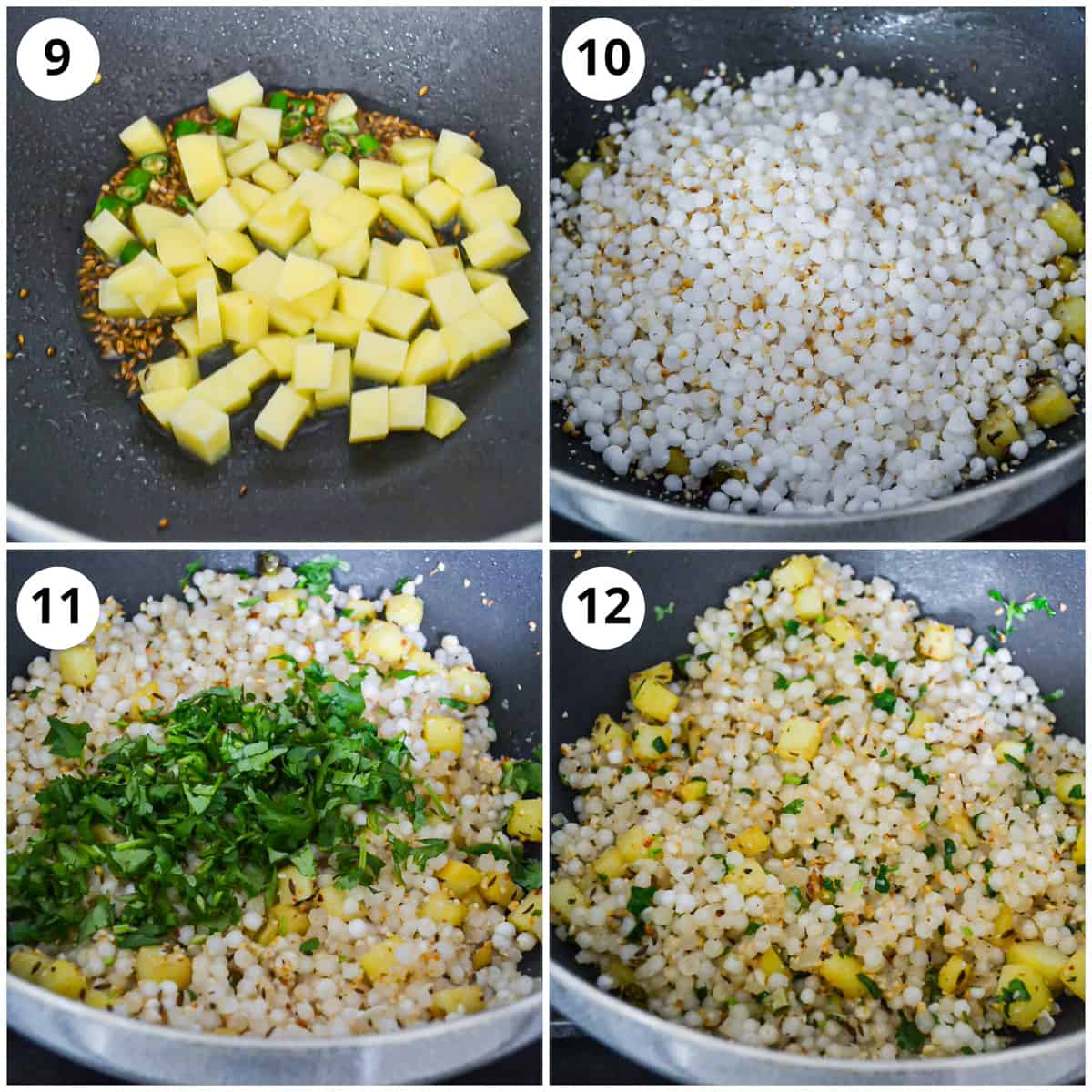
9 - In a pan, heat ghee on medium heat. Add the cumin seeds and allow them to sizzle for a few seconds.
Stir in the green chili, curry leaves (if using), potatoes, and a sprinkle of salt. Mix well and cook, covered, for 5-7 minutes (or until the potatoes are cooked). Stir the potatoes intermittently to prevent them from sticking. Alternatively, use boiled potatoes to cut down the cooking time.
10 - Once the potatoes are cooked, turn the heat to medium-low and add the sabudana peanut mixture to the pan. Mix well with a light hand so the sago pearls don't break. Cover and cook for 5-7 mins, stirring intermittently.
Be sure not to overcook or overmix the khichdi, or it will become sticky.
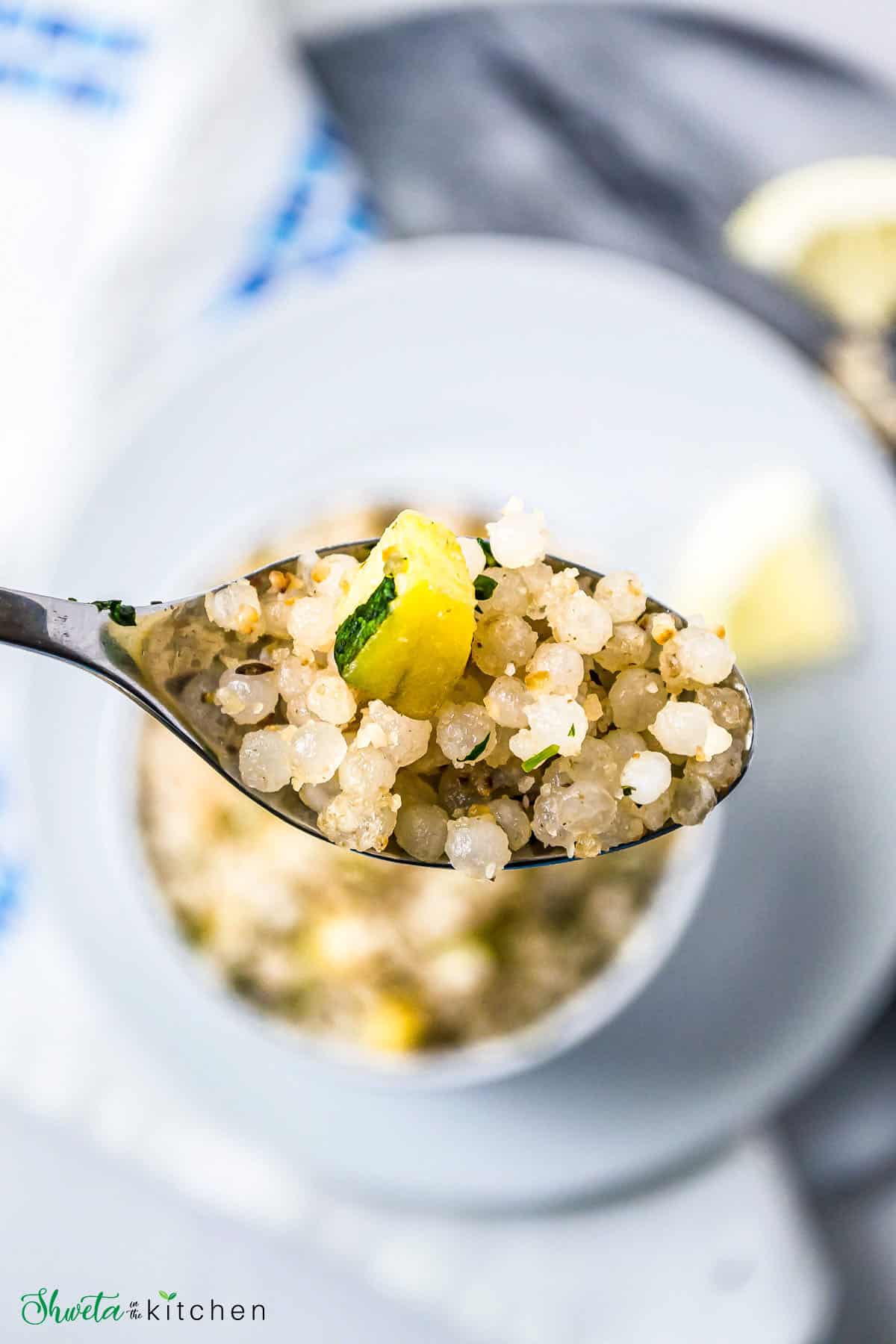
When the sabudana pearls turn from white to transparent, you know your khichdi is ready. Turn off the heat
11 & 12 - Add lemon juice and coriander (cilantro) leaves and give it a final mix.
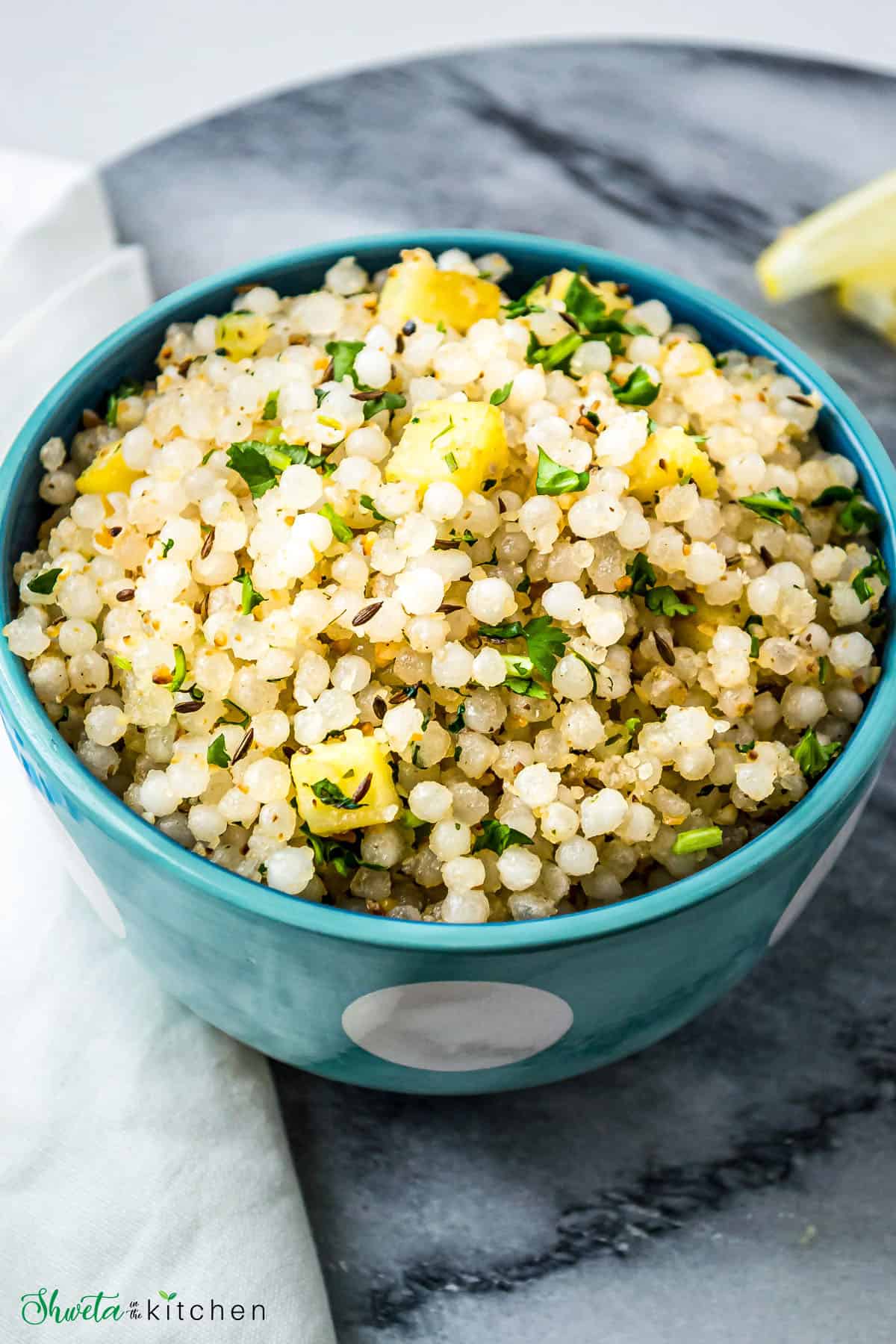
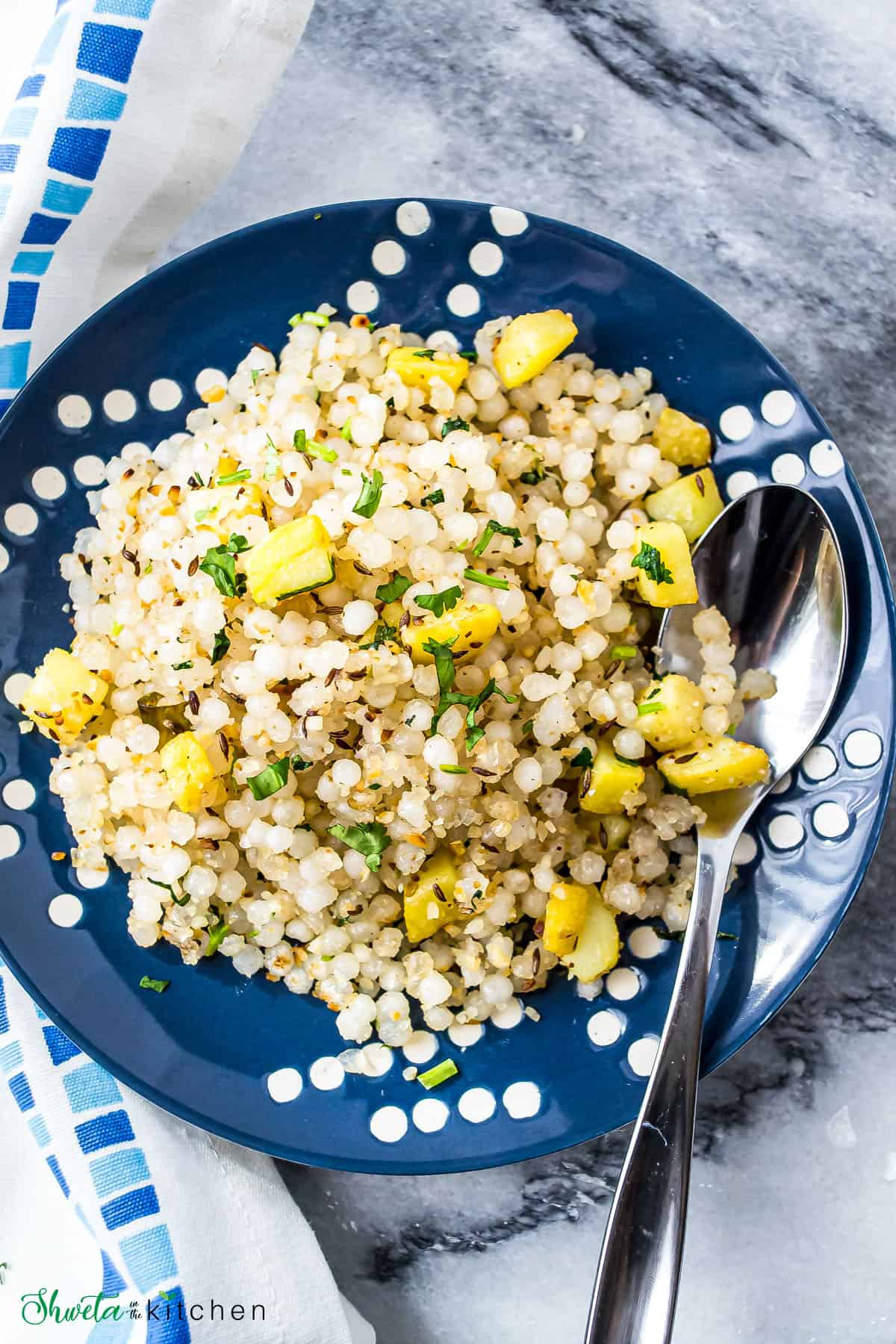
Perfectly tasty, soft, non-sticky Sabudana ki Khichdi is ready!!
Serving Suggestion
Serve Sabudana khichdi hot on its own or with a bowl of yogurt and/or fruits on the side. Pair it with chai for that wholesome breakfast or snack.
You can also serve it with some green chutney on non-fasting days.
Storage Instructions
You can store leftover khichdi in an airtight container in the fridge for 3-4 days. Reheat in the microwave for a few seconds and serve.
Alternatively, use leftover khichdi to make Sabudana Vada.
Variations
I usually skip curry leaves and cilantro when making sabudana khichdi as a fasting meal.
To keep this recipe vegan, skip ghee and use neutral cooking oil.
Mix in grated coconut for a touch of sweetness and flavor.
Tips for Soft, Non-sticky Sabudana Khichdi
Rinse the sabudana well until the water runs clear to remove all the starch, which will prevent stickiness later.
Soak sabudana in just enough water for 2 hours. (1 cup sago soaked in 2 cups). Soaking in a lot of water will over-soak them, and they will end up being gluey when cooked.
Drain the water completely, then refrigerate overnight or place the covered container on the countertop. Refrigeration allows the excess water to be absorbed by sabudana, resulting in fluffy tapioca pearls.
If you don't have the time to refrigerate overnight, do it for at least 2-3 hours, or spread them on a plate or paper towel to dry them up further.
Soaking time may vary, depending on the quality of the sabudana, so experiment with your variety.
Check soaked sabudana by pressing between your thumb and index finger. It should mash easily.
Gently fluff the soaked sabudana with a fork to separate any clumps.
Grind the roasted peanuts coarsely so there are bits of peanuts as well as a peanut powder. Adding ground peanuts helps keep the sabudana pearls separate by absorbing excess moisture, making the khichdi non-sticky.
Use a non-stick pan or a well-seasoned skillet to avoid sticking.
Don't overcook. Sabudana cooks quickly, so overcooking and excessive stirring can result in a sticky, goopy (mushy) khichdi.
You can tell sabudana is cooked when it turns from white to a transparent color. Don't cook beyond this point.
Some khichdi lumps are expected and normal, since it is made of starch, after all. Just fluff with a fork, and it should separate easily.
Use enough Ghee to make khichdi, as it prevents the tapioca pearls from sticking. Skip ghee to make it vegan and use just oil.
Frequently Asked Questions
When not fasting, you can add curry leaves, turmeric, and green chilies for additional flavor. For added variation, try adding red chili powder and ginger.
I usually just add the basics to my khichdi (cumin seeds, green chilies, potatoes, roasted peanuts, soaked sabudana, salt, and lemon juice).
Sabudana khichdi is rich in carbohydrates (starch), protein, and fats, which helps keep you full for longer and provide the energy needed to get through the day. At the same time, it is also easier to digest and, therefore, one of the preferred meals during fasting.
Yes, this is a great dish for anyone suffering from gluten intolerance. It has a good amount of fiber and can relieve bloating.
Oversoaking and overcooking are the two main reasons why sabudana khichdi becomes sticky. To prevent the sabudana pearls from becoming sticky, rinse them thoroughly to remove excess starch before soaking. Soak in just enough water until the pearl doubles in size. Drain excess water after soaking, and last but not least, allow the sago to rest/dry so each pearl is separate, which will result in the perfect non-sticky khichdi.
Ideally, it is best to soak sago/tapioca pearls, but if you forgot to soak the sabudana ahead of time, soak it in boiling hot water for 1-2 hours. Test to see if they have doubled in size, and you can mash them easily. If yes, drain and spread them on a towel to dry further, and then use them in this recipe.
More Indian Breakfast Recipes




Hope you enjoy this Sabudana Khichdi Recipe!! If you give this recipe a try, please rate it by clicking stars ⭐️ on the recipe card. Thank you ❤️! You can also follow me on Facebook | Instagram to see what's cooking in my kitchen!!
Recipe Card
Sabudana Khichdi Recipe
Ingredients
- 1 cup sabudana (sago or tapioca pearls)
- ½ cup peanuts raw or roasted unsalted peanuts
- 2 tablespoons ghee or oil
- 1 teaspoon cumin seeds (jeera)
- 1 sprig curry leaves optional
- 1-2 green chili chopped or slit, adjust to taste
- 1 medium potato peeled and cut into small cubes
- ¾ teaspoon salt or sendha namak, adjust to taste
- 1-2 teaspoon sugar adjust to taste
- 1-2 tablespoons lemon juice
- ¼ cup cilantro finely chopped
Want to save this recipe?
Instructions
Soak Sabudana
- Rinse the sabudana well (4-5 times) till water runs almost clear. This is important to get rid of all the starch.
- Transfer sabudana to a wide bowl and soak them in 2 cups of fresh water for 2 hours. They will double in size.
- Drain the remaining water using a colander, and cover the sabudana overnight or at least for 4-5 hours. I usually refrigerate them overnight.
- Fluff the sabudana pearls using a fork to separate the pearls without breaking them.
- To check if sabudana is ready to cook, press a pearl between your thumb and index finger. It should mash easily. If the center feels hard, soak in 2-3 tablespoons of water for another 30 mins and test again.
Roast Peanuts
- Skip roasting step if you are using roasted peanuts.
- Dry roast the peanuts on medium-low heat until golden and crunchy.
- Turn off the heat and allow the peanuts to cool completely.
- Optional - Peel the skin off by rubbing the peanuts between your palms.
- Coarsely crush the roasted peanuts in a mortar pestle or food processor such it's a mix of peanut powder and bits of peanuts.
How to Make Sabudana Khichdi
- In a non stick pan, heat ghee or oil on medium heat. Add the cumin seeds and curry leaves (optional) and allow them to sizzle for a few seconds.
- Stir in green chili, potatoes, and a sprinkle of salt. Turn the heat to medium-low. Mix well and cook, covered, for 5-7 minutes (or until the potatoes are cooked). Stir the potatoes intermittently to prevent them from sticking.
- Meanwhile, to the bowl with soaked sabudana, add the coarsely ground peanuts, salt, and sugar. Mix well using a fork and keep aside.
- Once the potatoes are cooked, add the sabudana peanut mixture to the pan. Mix well and cook covered for 5-7 mins stirring intermittently.Make sure not to overcook, over mix the khichdi, or else it will turn sticky.
- When the sabudana pearls turn from white to transparent you know your khichdi is ready. Turn off the heat.
- Add lemon juice and cilantro and mix gently to combine. Tasty, soft, non-sticky Sabudana Khichdi is ready!!
- Serve Sabudana Khichdi hot on its own or with a bowl of yogurt and/or fruits on the side.
Notes
Nutrition
Update Notes: This post was originally published on Feb 25, 2015, but was republished with step-by-step instructions and tips in September 2021.

Sangeeta says
Thanks for the recipe - tried it today. Came out fairly well. Next time, I’ll be more careful with the soaking and drying of the sabudana. It was a little sticky but overall still delicious. Not bad for my first time 🙂
Jayanthi Sindhiya says
Wow a brilliant recipe with sabudana!!! Love its fluffy texture
Meri Rasoi says
This one of the much loved breakfast options..brilliantly prepared and awesome clicks