
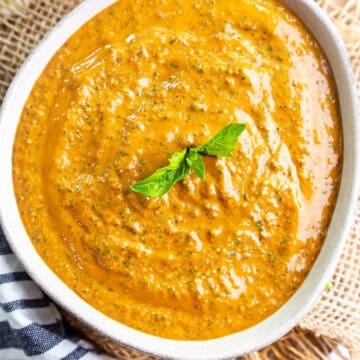
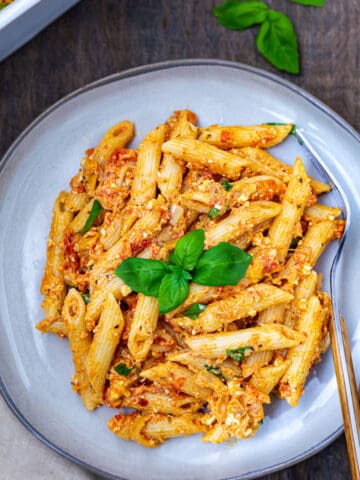
Tomato Pesto with roasted tomatoes, fresh basil, garlic, olive oil, and Parmesan is bright, flavorful, and perfect when tossed into a quick Roasted Tomato Pesto Pasta. This versatile pesto also works as a spread for pizza, sandwiches, crostini, or as a dip. It comes together quickly, making it ideal for weeknights or make-ahead meals.
I'm sharing how to make roasted tomato pesto from scratch and how to use it to make a simple yet flavorful tomato pesto pasta dish.

Want to save this recipe?
When you think of pesto, you think of the green basil pesto. While we love the classic pesto, you'll love this easy roasted tomato pesto sauce even more, especially if you're a tomato lover.
I had shared my roasted tomatoes recipe and mentioned you could turn those into a delicious Pesto-Tomato Pesto, which is what I am sharing with you all today.
We have been loving this pesto and have it stocked up in my freezer for those quick meals. Toss it with your favorite pasta, chicken, or veggies for that perfect meal.
If you love pesto sauce, you can also try my other pesto recipes - Walnut Basil Pesto and Spinach Basil Pesto.
Jump to:
What is Tomato Pesto
Tomato pesto is a flavorful variation of the classic basil pesto (pesto alla Genovese). It's also known as Sicilian Pesto (pesto alla Trapanese), a vibrant regional recipe from Sicily.
Unlike traditional green pesto made with basil, pine nuts, garlic, Parmesan, and olive oil, the Sicilian pesto recipe uses fresh or roasted tomatoes, almonds instead of pine nuts, basil, garlic, olive oil, and Pecorino or Parmesan cheese.
Typically, in Sicilian pesto, roasting tomatoes is not required, but I prefer using roasted tomatoes because they add an extra layer of richness and depth. In this recipe, I use walnuts (a slightly earthy twist), though almonds are traditional.
You can make it the traditional way, by grinding in a mortar and pestle, or blitz all the ingredients in a food processor or blender.
The result is a pesto that's sweeter, deeper, and slightly tangy from the tomatoes, yet lighter and brighter than classic basil pesto.
This easy roasted tomato pesto recipe is delicious, versatile to toss with pasta (like the roasted tomato pesto pasta I'm sharing today) or use as a pizza sauce, marinade, dip or spread on sandwiches, crostini, or wraps.
Recipe Ingredients

Roasted Tomatoes: I prefer using roasted tomatoes for tomato pesto. You can use grape or cherry tomatoes for roasting. Roasting the tomatoes concentrates their sweetness and adds a caramelized depth.
Fresh Basil: Basil is the heart of any pesto, adding a fresh, aromatic flavor that balances the sweetness of the roasted tomatoes.
Nuts: I have used walnuts, but you can use silvered almonds or even Pine Nuts. Pine nuts are classic, almonds are traditionally Sicilian, and walnuts give a slightly earthy, robust flavor.
Garlic: Fresh garlic adds a sharp, savory bite that complements the basil and tomatoes.
Cheese (Parmigiano Reggiano or Pecorino Romano): Parmesan lends a nutty, salty richness, while Pecorino adds a sharper, tangier kick. Either works well, so choose based on your taste.
Olive Oil: A good extra-virgin olive oil ties everything together, creating a silky, smooth pesto and adding a fruity, peppery note.
Sea Salt: Just enough to heighten all the flavors. Maldon's flaky texture dissolves easily, leaving a clean finish. Or use regular salt, but adjust to taste.
Black Pepper: Freshly ground pepper adds warmth and a hint of spice, balancing the sweetness of the tomatoes.
Pasta: I prefer Fusilli or a spiral shape pasta, as it holds the pesto beautifully, but you can use penne, spaghetti, or even gluten-free pasta, depending on your preference.
Lemon juice (optional): Add 1 tablespoon of fresh lemon juice for a touch of tang and brightness. It enhances the flavor and helps preserve the pesto's vibrant color.
Please refer to the recipe card for exact ingredient measurements.
How To Make Roasted Tomato Pesto (Stepwise Photos)
Prep & Roast the Tomatoes - you can find complete detailed instructions here. Please note that roasting tomatoes is optional, as it's not traditional in Sicilian pesto. However, I love the flavor of tomato pesto with roasted tomatoes, so I highly recommend it.
Toast your nuts: In a dry skillet over medium heat, toast walnuts/almonds until fragrant (about 3-4 minutes). Cool briefly. Toasting the nuts deepens the flavor and helps the pesto emulsify, but keep a close eye since they burn quickly.
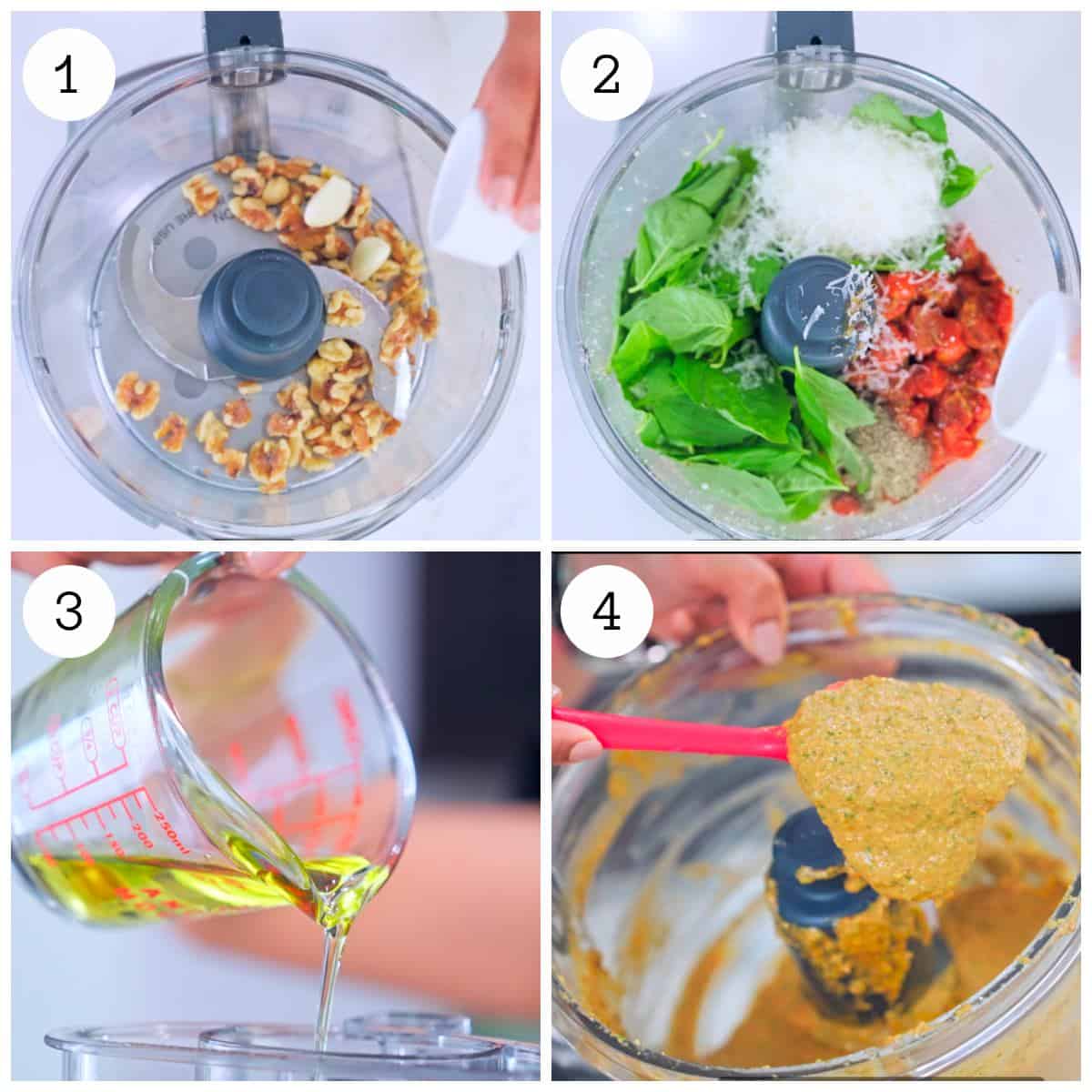
1 - Add the toasted nuts and garlic to a food processor. Pulse to a coarse crumb (10-12 quick pulses).
2 - Open the lid, add cooled roasted tomatoes, fresh basil leaves, salt, black pepper, and grated Parmesan or Pecorino Romano. Pulse in short bursts until everything is finely chopped. Using a spatula, scrape the sides of the food processor to ensure even mixing.
3 - With the food processor running, add olive oil through the shoot in a thin stream until the pesto looks cohesive and glossy (about 30-45 seconds). Scrape down as needed.
4 - Taste and adjust salt/pepper if needed. You can also add 1-2 tablespoons of lemon juice if necessary to balance the flavors.. Tomato pesto is ready to use or store!

How To Make Roasted Tomato Pesto Pasta
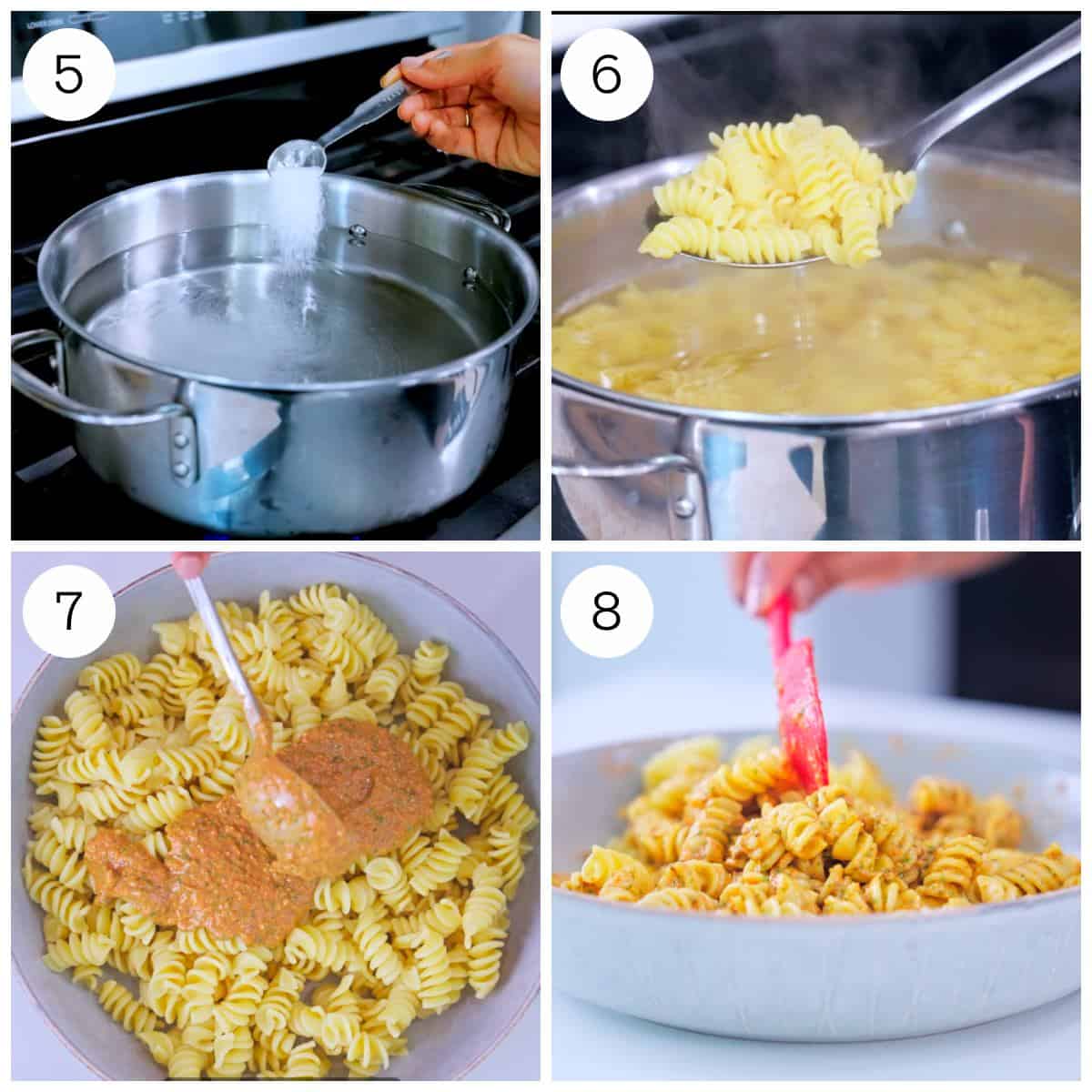
5 - Boil pasta as per package instructions in well-salted water until al dente.
6 - Reserve ½-¾ cup of pasta water and then drain.
7 and 8 - Off heat, toss pasta with ¾-1 cup pesto (or as needed). You can add splashes of pasta water (if needed) until it's silky and well-coated.
Serving Suggestion
Serve the roasted tomato pesto pasta, topped with extra-grated Parmesan, basil, and a sprinkle of black pepper and red pepper flakes. Drizzle some olive oil for that extra touch (optional).
Pair the tomato pesto pasta with garlic bread, bruschetta, or a Caesar salad for a complete meal.

How to Store Tomato Pesto (Fridge & Freezer)
In the Fridge: You can store Tomato pesto in the refrigerator for 4-5 days. Store it in an airtight jar, smooth the top, and cover it with a thin layer of olive oil to prevent it from turning dark.
In Freezer: This make-ahead tomato pesto freezes beautifully for quick weeknight meals. Freeze pesto in ice cube trays or small containers for up to 2-3 months. Once frozen, transfer cubes to a freezer bag. Thaw overnight or stir cubes directly into hot pasta.
How to Use Tomato Pesto
Tomato pesto is incredibly versatile and can be used beyond pasta. Here are some delicious ideas:
- Toss with pasta: Classic roasted tomato pesto pasta recipe makes an easy weeknight dinner or a quick lunch.
- Pizza sauce: Use it in place of marinara or drizzle over baked pizzas for extra flavor.
- Sandwiches & wraps: Use as a flavorful spread in veggie, cheese, or grilled sandwiches.
- Crostini & appetizers: Top toasted bread or crackers for a quick starter.
- Dips & dressings: Swirl into hummus, yogurt, or vinaigrettes for an extra flavor boost.
- Marinade: Coat vegetables, chicken, or paneer before grilling or roasting.
- Soups & stews: Stir in a spoonful to deepen flavor.

Recipe Tips
- Roast the tomatoes well: Let them blister and caramelize for maximum sweetness and depth.
- Toast the nuts: Lightly toasting walnuts, almonds, or pine nuts enhances their flavor and gives the pesto a richer body.
- Use good olive oil: Extra-virgin olive oil adds fruity, peppery notes that balance the tomatoes.
- Adjust texture: If the pesto is too thick, add more olive oil or a splash of pasta water. If it's too thin, pulse in extra nuts or cheese.
- Balance flavors: Taste and adjust with salt, pepper, or a squeeze of lemon juice to brighten.
- Save pasta water: When tossing pesto with pasta, use the starchy water to help the sauce coat evenly and stay silky.
- Blender vs. Food Processor: For a smoother, creamier texture, use a blender to puree all the ingredients. A food processor gives a more rustic, chunky pesto with a bit more texture.
- Lemon Juice (Optional): Add 1 tablespoon of fresh lemon juice for a touch of tang and brightness. It enhances the flavor and helps preserve the pesto's vibrant color.
- Store smart: Always top-stored pesto with a thin layer of olive oil to prevent browning and oxidation.
Frequently Asked Questions
Yes. For a vegan tomato pesto, replace the Parmesan with nutritional yeast or a vegan hard cheese. For a nut-free tomato pesto, swap nuts for sunflower seeds or pumpkin seeds. Both variations keep the pesto creamy and flavorful.
Tomato pesto can become watery if the roasted tomatoes release too much juice or if too much olive oil is added. To fix, drain excess liquid before blending, then adjust thickness by adding more nuts or cheese.
Yes, tomato pesto can turn brown due to oxidation of basil, tomatoes, and garlic when exposed to air. It's usually safe to eat, and the color change is cosmetic. To prevent browning, store pesto in an airtight jar (preferably smaller containers to minimize air exposure), topping it with olive oil or adding a squeeze of lemon juice to slow oxidation.
More Pasta Recipes


Tried this recipe? I'd love to know how it turned out! Please take a moment to leave a comment and rate the recipe. Your feedback helps others and means a lot to me. If you're on Instagram, tag me in your creations so I can see and share them. Thanks for being here and cooking with me!
Recipe Card
Tomato Pesto | Roasted Tomato Pesto Pasta
Equipment
- Food processor or blender
Ingredients
For Tomato Pesto
- 1 cup packed fresh Basil leaves approx 28 grams
- 1 cup Roasted Tomatoes
- ⅓ cup walnuts silvered almonds or pine nuts
- 2 fat garlic cloves
- ½ cup grated Parmigiano Reggiano or pecorino Romano
- ¼ cup extra virgin olive oil
- ½-1 teaspoon sea salt (adjust to taste)
- ½ teaspoon ground black pepper
- 1 tablespoon lemon juice optional
For Tomato Pesto Pasta
- 16 oz Fusilli pasta or pasta of choice
- 2 teaspoons salt for boiling pasta
- Tomato Pesto from above
- Fresh basil for serving
- Red pepper flakes optional, for serving
- Freshly cracked black pepper optional, for serving
- Grated Parmigiano Reggiano or pecorino Romano, for serving
Want to save this recipe?
Instructions
For Roasted Tomato Pesto
- In a dry skillet over medium heat, toast walnuts/almonds until fragrant (about 3-4 minutes).
- Add the toasted nuts and garlic to a food processor. Pulse to a coarse crumb (10-12 quick pulses).
- Open the lid, add cooled roasted tomatoes, fresh basil leaves, salt, black pepper, and grated Parmesan or Pecorino Romano. Pulse in short bursts until everything is finely chopped. Using a spatula, scrape the sides of the food processor to ensure even mixing.
- With the food processor running, add olive oil through the shoot in a thin stream until the pesto looks cohesive and glossy (about 30-45 seconds). Scrape down as needed.
- Taste and adjust salt/pepper if needed. You can also add 1-2 tablespoons of lemon juice to balance the flavors.
- Tomato pesto is ready to use or store! This recipe makes about 2 cups of pesto.
For Roasted Tomato Pesto Pasta
- Boil pasta as per package instructions in well-salted water until al dente. Reserve ½-¾ cup of pasta water and then drain.
- Off heat, toss pasta with 1 cup pesto (or as needed). You can add splashes of pasta water (if needed) until it's silky and well-coated.
- Serve the roasted tomato pesto pasta hot, topped with extra-grated cheese, basil, and a sprinkle of black pepper and red pepper flakes. Drizzle some olive oil for that extra touch (optional). Pair it with garlic bread, bruschetta, or a salad for a complete meal.
Video
Notes
- Roast the tomatoes well: Let them blister and caramelize for maximum sweetness and depth.
- Toast the nuts: Lightly toasting walnuts, almonds, or pine nuts enhances their flavor and gives the pesto a richer body.
- Use good olive oil: Extra-virgin olive oil adds fruity, peppery notes that balance the tomatoes.
- Adjust texture: If the pesto is too thick, add more olive oil or a splash of pasta water. If it's too thin, pulse in extra nuts or cheese.
- Balance flavors: Taste and adjust with salt, pepper, or a squeeze of lemon juice to brighten.
- Lemon Juice (Optional): Add 1 tablespoon of fresh lemon juice for a touch of tang and brightness. It enhances the flavor and helps preserve the pesto's vibrant color.
- Blender vs. Food Processor: For a smoother, creamier texture, use a blender to puree all the ingredients. A food processor gives a more rustic, chunky pesto with a bit more texture.
- Save pasta water: When tossing pesto with pasta, use the starchy water to help the sauce coat evenly and stay silky.
- Storage: Top pesto with a thin layer of olive oil to prevent browning and oxidation.
Nutrition
Update Notes: This post was originally published on December 14, 2013, and republished in November 2025 with step-by-step instructions, new photos, tips, and a video.

Kalpana Sareesh says
yumm yumm
Sangeetha says
Flavorful n delicious Pasta...looks inviting!
Akila says
Drool worthy pasta...
Event: Dish name starts with Q till Feb 28th
Sanoli Ghosh says
I can finish that bowl right now.........droolworthy tomato basil pasta.
today's recipe:
http://sanolisrecipies.blogspot.in/2013/02/my-200th-post-savoury-pancake-regular.html
Renuka says
Lovely pics!
Aruna Manikandan says
looks yummy.....
Arthy Suman says
very inviting fusili preparation dear...so mouth watering
runnergirlinthekitchen.blogspot.com says
Yummm Yummm I can have that entire bowl!
Priya says
Omg, love to finish that whole bowl, irresistible pasta..
Priya R says
Delicious pesto and I love the combinations... yum!!! clicks are stunning
Beena.stephy says
YUMMY PASTA
Swathi Iyer says
Delicious pasta recipe Shweta.
Rita Bose says
Looks delicious! Drooling over here! Wonderful snaps @ Shweta!
http://www.rita-bose-cooking.com/
Sangeetha Nambi says
OMG ! Its toooooooooo inviting....
http://recipe-excavator.blogspot.com
divya says
ahh....mouthwatering! Click makes it more tempting!!