
Rava Ladoo, also known as Rava Laddu, is a popular Indian sweet made with semolina (rava or suji), ghee, sugar, cardamom, and dried fruits. Melt-in-the-mouth and easy to make, these soft rava ladoos are perfect for Diwali, celebrations, gifting, or everyday sweet cravings.
I'm sharing how to make a Maharashtrian-style rava ladoo at home, along with tips to avoid binding issues and achieve the ideal texture.

Want to save this recipe?
Every Diwali, my Grandma and Mom would gather in the kitchen to make Rava Ladoo (Rava Laddu) along with other Diwali sweets and snacks. I'd always be there to sneak in to grab a spoonful of the warm rava mixture before they rolled it into ladoos.
This simple Maharashtrian rava ladoo recipe has been in my family for generations, and making it each year for Diwali feels like carrying forward a delicious tradition.
This rava laddu recipe comes together quickly and tastes delicious every time. You can make it in advance since it has a great shelf life. It is perfect for festivals or anytime you crave a quick homemade sweet.
If you love ladoos, you must also try my Besan laddo, Tilgud laddo, and Coconut Ladoo recipe.
Jump to:
What is Rava Ladoo?
Rava Ladoo, also known as Rava Laddu, Sooji Ladoo, or Semolina Ladoo, is a traditional Indian sweet made during festivals and special occasions.
It is made by roasting semolina (rava or suji) in ghee, then mixing it with powdered sugar, cardamom, and nuts. The result is soft, melt-in-the-mouth ladoos (sweet balls).
"Rava" means semolina, and "ladoo" means round, sweet balls. This festive sweet is popular across India, from Maharashtra to Andhra Pradesh and Karnataka, and every region and family has its own unique way of making it.
Some make it the traditional way with sugar syrup (chashni), resulting in a firmer, glossier ladoo with a longer shelf life. Others add fresh coconut or desiccated coconut for richness (although with a shorter shelf life), or include extra nuts for added crunch.
About my Maharastrian Rava Ladoo recipe
I'm sharing a straightforward, no-coconut rava ladoo recipe, a Maharashtrian-style version passed down in my family. It's beginner-friendly and quick.
This recipe uses rava, wheat flour, ghee, sugar, and cardamom. Roasting a small amount of whole wheat flour along with rava adds a light texture and a nutty depth of flavor, helping to bind the rava laddu mixture so the ladoos hold their shape beautifully without crumbling.
Because this version uses powdered sugar instead of sugar syrup, you don't need to worry about achieving a one-thread consistency or precise timing.
The ladoos come together effortlessly and are perfect for Diwali, Ganesh Chaturthi, or any occasion when you want a homemade Indian sweet to share with family and friends.
With their soft texture, mild sweetness, and ease of preparation, these rava ladoos are the kind of festive treat you'll want to make again and again.
Recipe Ingredients

Fine rava/sooji/semolina: This is the primary ingredient. Always use fine rava (also known as Bombay rava) for ladoos. Medium or coarse rava won't bind easily, making it grainy. If you only have coarse rava, grind it before using so the ladoos keep their soft texture with a light crunch.
Whole wheat flour (atta): A hallmark of the Maharashtrian version, wheat flour adds a nutty flavor and balances the texture of rava ladoo. It also improves binding, helping the ladoos hold their shape without crumbling.
White granulated sugar: Blend granulated sugar in a blender into a powder, then use it to make ladoos. Powdered sugar blends smoothly with rava, resulting in ladoos with a soft, even texture that eliminates the need for sugar syrup. If you prefer a less sweet taste, you can reduce the amount of sugar.
Ghee: I prefer using homemade ghee, but good-quality store-bought ghee works just as well. Ghee lends richness, enhances flavor, and is essential for binding the dry ingredients into ladoos.
Cardamom powder: A classic flavoring in Indian sweets. Even a small pinch infuses the ladoos with a warm, sweet aroma that defines their traditional taste.
Cashews: Coarsely crushed cashews add crunch and texture to the otherwise soft ladoo. Skip them if you'd like to keep the recipe nut-free.
Golden raisins: I've seen my grandma add raisins to rava ladoo, and that's how I continue to make them too. Raisins add a pop of natural sweetness and a chewy texture, balancing the richness of ghee and the graininess of rava.
Milk (optional): Add only if the laddu mixture feels too dry while shaping. It helps with binding, but remember that milk shortens the shelf life, so consume these ladoos within a few days.
Please refer to the recipe card for exact ingredient measurements.
How to Make Rava Ladoo (Stepwise Photos)

1: Powder the sugar: Blend the granulated sugar in a grinder until it is fine and powdery. Set aside.
2: Roast rava: Roast the rava on medium to medium-low heat in a heavy-bottomed pan until aromatic but not browned (approximately 8-10 minutes). Browning changes the flavor, making the ladoos taste different.
3: Roast the wheat flour: Add the whole wheat flour to the same pan and continue roasting on medium-low heat for another 6-8 minutes. Both flours should have a nutty aroma but remain light in color.
4: Add ghee: Pour in the ghee and mix well until well combined.

5: Add Nuts: Add the cashews and raisins and sauté for a minute.
6: Cool slightly: Switch off the heat and allow the mixture to cool until it is just warm - warm enough to handle but not hot.
7: Mix in sugar and cardamom: Add the powdered sugar and cardamom powder to the roasted rava mixture.
8: Mix everything thoroughly until well combined and the mixture holds its shape. I prefer using my hands to mix.

9: Shape the ladoos: Take small portions of the mixture in your palm.
10: Press firmly between your fingers and palm for atleast 60-90 seconds (check video) to form a rough ball. Press a raisin on top for garnish. The warmth of your hands helps melt the ghee and bind the mixture. If the mixture feels too dry, add a teaspoon of warm ghee or milk at a time.
11: Smooth it out by rolling between both palms.
12: Repeat: Repeat this process with the remaining mixture. This recipe yields approximately 16 small, bite-sized ladoos
Tip for Binding Rava Ladoos
Rava ladoos bind best when the mixture is still warm (neither hot nor cold). Take a small handful and press it firmly in your palm for a few seconds, then roll gently to form a ball. The gentle warmth of your hands helps the ghee soften and hold everything together.
- If the mixture feels too dry and won't keep its shape, sprinkle in 1-2 teaspoons of hot ghee or warm milk.
- If it feels sticky, let it rest at room temperature for 5 minutes before trying to shape.
- If the mixture has cooled, gently reheat it for a few seconds until it's just warm to the touch to make those perfect, smooth, soft ladoos.

Storage Instructions
Once the rava ladoos have cooled completely, transfer them to an airtight container. They stay fresh at room temperature for 7-10 days when stored in a cool, dry place.
Adding coconut milk or jaggery shortens the shelf life. Consume within 2-3 days and keep refrigerated. Bring them back to room temperature before serving for the best texture.
These ladoos also travel well, making them ideal for festive gifting or as a sweet snack on the go.

Tips for Making the Best Rava Ladoo
Type of rava to use: Fine rava, also called barik rava or sooji, works best for making rava ladoo. Coarse rava makes it difficult to bind, resulting in a gritty texture. If you only have coarse rava, roast it first and then grind it to a finer texture for softer, smoother ladoos.
Roast the rava slowly: Always roast semolina (rava/sooji) on medium-low heat until aromatic. Slow roasting enhances flavor and ensures the ladoos are soft, well-cooked, and not raw or gritty.
Add wheat flour for binding: In this Maharashtrian-style rava ladoo recipe, wheat flour helps bind the mixture, preventing it from crumbling. It also lends a subtle nutty flavor.
Use powdered sugar, not granulated sugar: Powdered sugar blends evenly with rava, giving the ladoos a smooth, melt-in-the-mouth texture without the need for a sugar syrup.
Check the temperature before shaping: Mix in sugar only when the roasted mixture is warm, not hot. Adding it too early can melt the sugar and make the mixture sticky.
Adjust the ghee carefully: too little makes ladoos dry and crumbly, while too much makes them greasy and unable to hold their shape. Start with the measured amount and add only if needed.
Troubleshooting binding: If the mixture feels dry, sprinkle 1-2 teaspoons of warm milk or ghee to help shape. If it feels sticky, let it rest at room temperature for a few minutes or refrigerate briefly before rolling. If the mixture has cooled, gently reheat it for a few seconds until it's just warm to the touch to make those perfect, smooth, soft ladoos.
Shape while warm: Form ladoos while the mixture is still warm. It binds better and shapes easily into smooth, round balls.

Frequently Asked Questions
If rava ladoos aren't binding, the mixture is either cold, too dry, or the sugar was added when the rava was hot, causing it to melt. Add 1-2 teaspoons of warm milk or ghee and mix again. Shape the ladoos while the mixture is still warm for the best results.
Rava ladoos turn hard if the rava is over-roasted, if too little ghee is used, or if the sugar isn't mixed properly. Always roast on medium-low heat, use enough ghee for softness, and add sugar when the mixture is lukewarm to get soft, melt-in-the-mouth ladoos.
Yes, jaggery can be used as an alternative to sugar in making rava ladoo, but the taste will be distinctly different. It gives the ladoos an earthy flavor and a slightly darker color. Use jaggery powder and grind it into a fine powder. Then, add it to the rava mixture and mix until the ladoos bind. Please note that jaggery-based ladoos have a shorter shelf life and should be consumed within a few days.
In the sugar syrup (chashni) method, sugar syrup binds the mixture, resulting in firmer ladoos with a longer shelf life. In the powdered sugar method, sugar is ground and added directly, resulting in softer ladoos that are quicker to prepare and more beginner-friendly. Both versions are delicious.
Yes, rava ladoo can also be made with coconut. Desiccated or fresh coconut is often added along with roasted rava, ghee, sugar, and cardamom for extra flavor and texture. If using fresh coconut, roast it separately to remove moisture before adding it to the mixture. Coconut adds richness, but it also shortens shelf life, so these ladoos should be consumed within 2-3 days or refrigerated.
More Indian Dessert Recipes
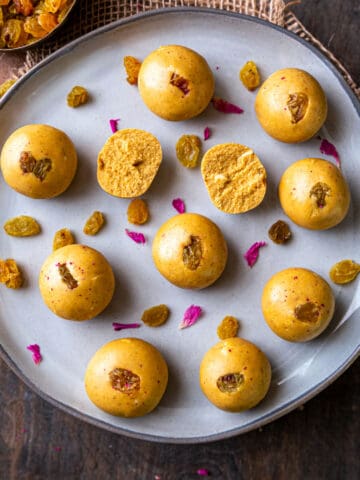

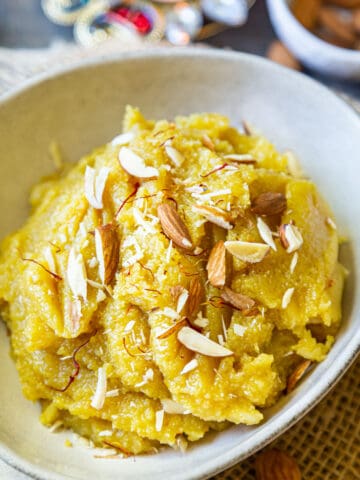
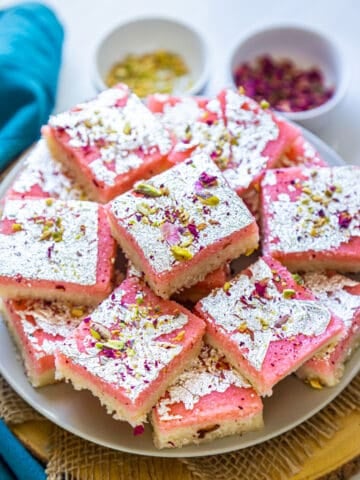

Tried this recipe? I'd love to know how it turned out! Please take a moment to leave a comment and rate the recipe. Your feedback helps others and means a lot to me. If you're on Instagram, tag me in your creations so I can see and share them. Thanks for being here and cooking with me!
Recipe Card

Rava Ladoo Recipe | Rava Laddu
Ingredients
- 1 cup fine rava (180 grams, semolina or sooji)
- ¾ cup white granulated sugar (150 grams)
- ½ cup whole wheat flour (60 grams, atta)
- 81 grams Ghee (about slightly less than ½ cup)
- ½ teaspoon cardamom powder
- ¼ cup cashews coarsely crushed
- 2 tablespoons golden raisins
- 1 tablespoon milk optional
Want to save this recipe?
Instructions
- Powder the sugar: Blend the granulated sugar in a grinder until it is fine and powdery. Set aside.
- Roast rava: Roast the rava on medium to medium-low heat in a heavy-bottomed pan until aromatic but not browned (approximately 8-10 minutes).
- Roast the wheat flour: Add the whole wheat flour to the same pan and continue roasting on medium-low heat for another 6-8 minutes. Both flours should have a nutty aroma but remain light in color.
- Add ghee: Pour in the ghee and mix well, coating the mixture evenly.
- Add Nuts: Add the cashews and raisins and sauté for a minute until well combined.
- Cool slightly: Switch off the heat and allow the mixture to cool until it is just warm - warm enough to handle but not hot.
- Mix in sugar and cardamom: Add the powdered sugar and cardamom powder to the roasted rava mixture. Mix thoroughly until everything is well combined and the mixture can hold its shape.
- Shape the ladoos: Take small portions of the mixture in your palm (I use a cookie scoop for equal portions). Press firmly between your fingers and palm for atleast 60-90 seconds (check video) to form a rough ball. Press a raisin on top for garnish, press again firmly, and smooth it out by gently rolling between both palms.
- The warmth of your hands helps melt the ghee and bind the mixture. If the mixture feels too dry, add a teaspoon of warm ghee or milk at a time, mix and then try rolling the ladoos. If the mixture has cooled, gently reheat it for a few seconds until it's just warm to the touch (do not overheat).
- Repeat with the remaining mixture. This recipe yields approximately 16 small, bite-sized ladoos
Video
Notes
Nutrition
Update Notes: This post was originally published on October 21, 2014, but it was republished in October 2025 with step-by-step instructions, new photos, tips, and a video.
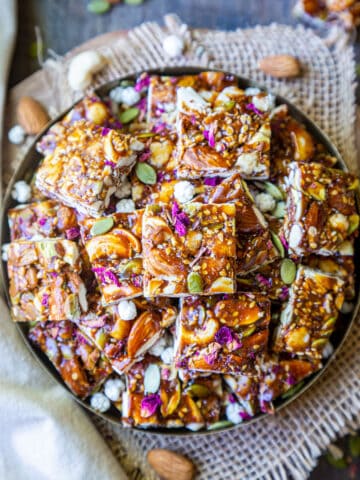

Julie says
beautiful laddus..delicious!!
Wishing u a very happy Diwali,Shweta 🙂
beena stephen says
Awesome ladoos. Love it